
Central Texas Midwifery expands access with Buda clinic
Central Texas Midwifery opens a Buda clinic, bringing prenatal and postpartum care closer to Austin-area families choosing community-based birth.
Central Texas Midwifery, a home‑birth practice serving the Austin region, has opened a dedicated clinic in the small city of Buda, south of Austin, to provide prenatal and postpartum care closer to families who live along the rapidly growing Interstate‑35 corridor between Austin and San Marcos. The practice has offered full in‑home care for about four years and previously relied on rented rooms in Austin for occasional clinic visits; the new site on Main Street in Buda now concentrates many appointments in one place for clients in Buda, Kyle and surrounding communities.
The clinic is led by two licensed midwives, Michelle Gold and Kate Van Der Riet. Gold lives in the Kyle–San Marcos area and Van Der Riet in south Austin. Both observed that, although Austin and San Marcos already had several midwives and birth centers, there were few services in the area in between, despite strong interest in home birth and community midwifery care. They founded Central Texas Midwifery in 2021 to address this gap and to reduce travel times for families seeking out‑of‑hospital birth options .
Gold and Van Der Riet provide what they describe as full‑scope midwifery for people with low‑risk pregnancies. Care includes prenatal visits, support during labour and birth at home, and structured follow‑up visits after the baby is born. The Buda clinic is designed mainly for prenatal and postpartum appointments, while births remain planned as home births. Families can choose a fully home‑based package or a hybrid model that combines clinic and home visits, depending on preference and geography.
Becoming a licensed midwife in Texas requires a defined sequence of education and examinations regulated by the Texas Department of Licensing and Regulation (TDLR). Applicants typically complete a state‑approved midwifery education programme, such as the Association of Texas Midwives Midwifery Training Program or the Midwifery College of Utah, and undertake an extended clinical apprenticeship under supervision. They must then pass the North American Registry of Midwives (NARM) examination and a state jurisprudence exam that covers relevant Texas midwifery laws and rules, before applying for a license.
According to the Hays Free Press report, Gold completed the Association of Texas Midwives training programme and became a licensed midwife in 2019 after clinical training at a busy birth centre alongside licensed midwives and certified nurse‑midwives. Van Der Riet graduated from the Midwifery College of Utah, first apprenticing with a home‑birth midwife in California and later completing her clinical training at the same Austin birth centre; she has been licensed in Texas since 2021.
Texas midwives practise under state standards that require them to work within a defined scope, use current midwifery competencies, maintain a safe environment, carry resuscitation equipment and follow detailed protocols for risk assessment, consultation and referral. The administrative rules specify that midwives should inform clients about risks and benefits, document care comprehensively and refer to physicians or hospitals when certain conditions arise, such as significant infections, hypertensive disorders or complicated lab results.
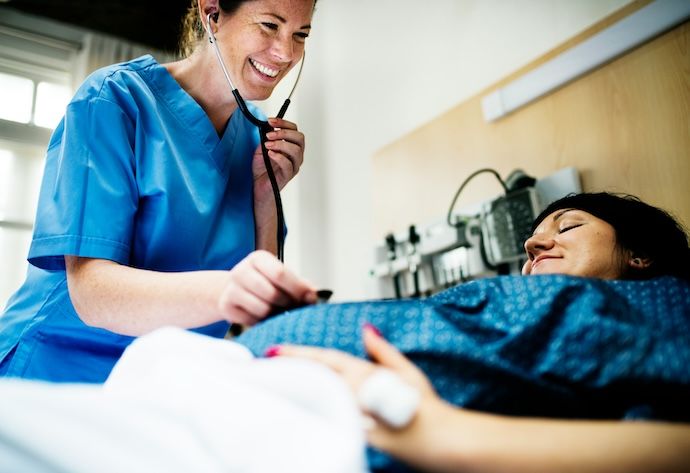 Photo by Curated Lifestyle
The new Buda clinic fits into this regulatory environment while also responding to broader debates about maternity care in the United States. Several studies have found that continuity‑of‑care models, in which a pregnant person sees the same midwife or small team throughout pregnancy, birth and postpartum, are associated with fewer interventions, lower rates of preterm birth and more positive birth experiences, particularly for low‑risk pregnancies.
More recent work comparing planned home births with births in freestanding birth centres reports that, for carefully screened low‑risk pregnancies attended by qualified midwives, safety outcomes are similar, with low rates of adverse events and relatively few transfers to hospital care, although findings depend on local systems and transfer pathways.
Gold has emphasised that many families choose midwifery care because they value bodily autonomy and shared decision‑making. In media interviews she has described how appointments include discussions of recommended procedures, possible alternatives and individual preferences in a setting that allows more time than many busy hospital clinics can offer. At the same time, she stresses that her practice is not opposed to hospitals and that emergency and specialist services are essential when complications arise, highlighting the importance of clear transfer plans and collaborative relationships with local obstetric teams.Qualitative research indicates that people who plan home births often conceptualise risk differently from institutions, weighing emotional safety and control alongside clinical risks.
Postpartum care is a particular focus at the new clinic. In the United States, national claims data suggest that more than half of new mothers miss the standard postpartum visit recommended within three to twelve weeks after birth, despite very high attendance at prenatal appointments. Central Texas Midwifery’s model includes five home or clinic visits in the first six weeks: usually within 24–36 hours of birth, again in the first week, and then at approximately two, four and six weeks postpartum. During these visits, midwives monitor physical recovery, support lactation, screen for mental‑health concerns and can provide well‑baby care within their scope.
The Buda location opens at a time when Buda itself is expanding rapidly as a small city just south of Austin. Historic Main Street has been the focus of revitalisation efforts through the Texas Main Street program, and the town has attracted new residents and health‑care providers as part of wider growth in Hays County. Locating a midwifery clinic on Main Street visibly anchors community‑based maternity care within this evolving local health landscape.
Central Texas Midwifery continues to serve a broad area that includes North, Central and South Austin as well as Buda, Kyle, San Marcos and several neighbouring cities, but the Buda clinic reduces travel distance for many clients while providing a stable base for prenatal classes, consultations and postpartum follow‑up. The development illustrates how relatively small practices can expand access to continuity‑of‑care midwifery models in rapidly growing suburban regions, complementing hospital services and potentially improving maternal and newborn experiences in Central Texas.
Source: Hays Freepress